Wednesday, 27 February 2013

Estonian manors and mansions

Estonia is a great destination for travellers for several reasons. Firstly the nature is wonderful and all the four seasons are different but yet equally fascinating. The country offers a lot for the keen and interested traveller.

If you are interested in history and culture we recommend that you take time to visit at least a few Estonian manors during your stay. The variety is surprisingly large including grand and beautifully renovated manors such as Palmse and Sagadi manors in northern Estonia or Taagepera in southern Estonia. There all also small wooden church manors and manor dairy farms all over the country. But, sadly, due to the Estonian past, and especially the Soviet era, many stately homes have totally disappeared or are in ruins. Yet their parks remain and can be pretty enchanting too.

Trees of the old Vana-Kirepi Manor park in southern Estonia

 If you want to read more about the manors and their history we suggest that you visit this forum, entirely dedicated to Estonian manors: Estonian Manors Portal. It has a brief overview of 438 of the most interesting manors in English. The portal is equipped with the relevant maps consisting of one general map and more than a hundred historical parish maps. These maps together with the contemporary road atlas easily allow to find all manor locations.

We at Villa Ottilia B&B are always ready to recommend interesting manors to our guests. For example, the Sangaste Castle, the former home of the  famous "Rye Count", the botanist Friedrich von Berg, is only ca. 20 km drive away from Villa Ottilia. There are also several other interesting mansions and manors that can easily be visited while staying at Villa Ottilia.

The Sangaste Castle close to Otepää

Manors have always interested me personally. So it is no surprise that I have visited quite many of them. I have walked in empty manor parks and knocked on closed doors of once great manors. And I have visited renovated grand manors and admired their splendour and unique style. I have seen some really scary ghost manors and some that are badly in need of care. And, of course, I have taken photos of all of them.

A couple of days ago I made an album of all the manors that I have photographed on Villa Ottilia's Facebook page. The album is not yet complete, and I guess, it never will be, as I will always attach more photos as time goes by. When I write this the album consists of 
89 photos. 

And I proudly present a link to the album: Estonian manors and mansions

Feel free to browse and comment the photos! And more importantly, if you want to explore these interesting manors and stately homes by yourself, book a trip to Estonia! And while you do it, why not contact and stay with us! We promise to give you the best tips and directions! 

Hope to see you soon! 

(Below are just some of the manors that you can visit on a day trip from Otepää and Villa Ottilia.)

The park of Pühajarve Manor in Otepää
The front of Mooste Manor in Tartumaa

The stately Manor of Sillapää in Räpina, Põlvamaa


Monday, 4 February 2013

Lahemaa National Park in Estonia - simply wonderful

Today I decided to put my English blog into good use and introduce you to Lahemaa National Park in northern Estonia, where we own a house that accommodates travellers from May to the end of September. The house is situated in the small but idyllic village of Võsu and is very close to the famous Võsu beach.

First, a few words about the house. It is a beautiful and romantic house that consists of several apartments   with a kitchen and a toilet together with a shower. Each apartment caters for four persons and is normally rented for one week at a time. Longer periods and long weekends are also possible.

Should you be interested, please do not hesitate to ask more!

My e-mail is tiina.linkama (at) villaottilia.ee. You can also contact me via Villa Ottilia B&B's home page. (Villa Ottilia B&B is our other holiday home in Otepää, South Estonia.) For further information click here: Villa Ottilia

Our house in Võsu, Lahemaa National Park


The inner yard of our house in Võsu,  70 km from Tallinn in North Estonia.


Lahemaa National Park - and Võsu - is one of the most interesting places in northern Estonia. Lahemaa is situated ca. 70 kilometres from Tallinn and is the oldest and largest national park in all Estonia.

The name "Lahemaa" can be translated into: The Land of Bays. And, indeed, the north coast of Estonia is formed by a string of several small peninsulas and bays. To the left of Võsu there are the Käsmu, Loksa and Juminda peninsulas. To the right you find the peninsulas of Lobi, Pedassaare (The Pine Island) and Vergi.

Some of the shores, like those in Pedassaare or Juminda are made of small  pebbles that glitter in many different colours as the sea washes them..But there are also many fantastic golden sand beaches - the 3 km long sand beach of Võsu being the most famous one.

All in all Lahemaa National Park consists of 72,500 ha, out of which 47,410 ha is land and 25,090 ha water.


A languid day at Võsu beach, Lahemaa National Park

Erratic boulders in Käsmu, Lahemaa National Park

A swan taking off at Käsmu Bay, Lahemaa National Park


Try to throw a flat stone so that it bumps several times on the surface of the water!


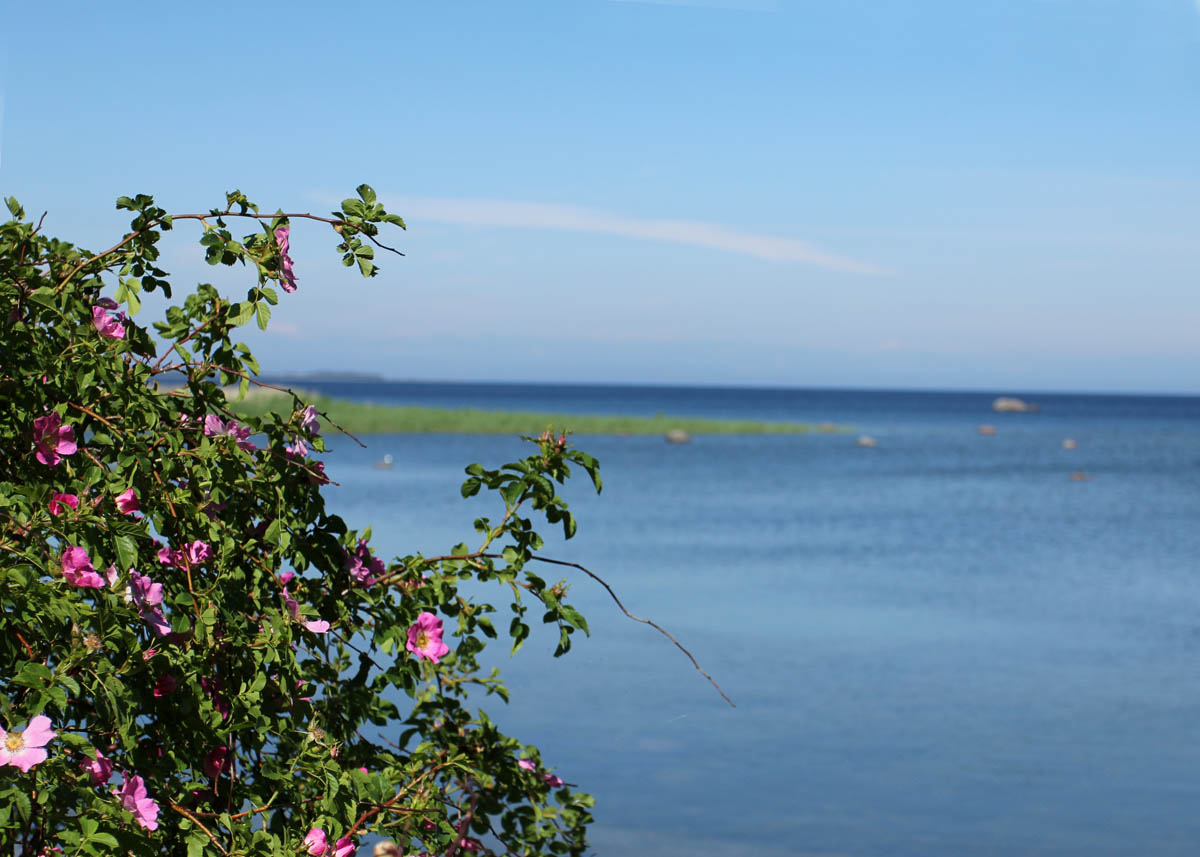
Wild roses in Turbuneeme Bay, Lahemaa National Park

Golden sunset on Võsu beach, Lahemaa National Park

The magic moment on Võsu beach just before the sun sets behind Käsmu peninsula


Lahemaa is one of Europe’s most important forest conservation areas, where many large mammals live. South of the national park are the large Kõrvemaa areas covered by mires and forests, which expand the living space of moose, boars, brown bears, lynxes, and foxes even more. You can find out about the lives of beavers on the beaver trail, located in a picturesque valley between the Oandu and Altja Rivers. Among the common birds seen here are the Ural Owl (Strix uralensis) and Black Woodpecker (Dryocopus martius); the Common Crane (Grus grus) comes to feed on the fields around Sagadi in autumn.

Lahemaa is not only stony and sandy seashores, picturesque bogs, pine forests, old-growth forests, cliff forests, alvars and rivers that have cut into the limestone cliff.  It is also full of culture that covers the entire history of Estonia. The closeness of the sea and the fantastic pine forests lead into shipbuilding and seafaring. Fishing and maritime trading were natural occupations, as was the smuggling of spirits and salt, too.

The historical villages like Käsmu, Vergi, Altja and Viinistu are living monuments of the golden days of seafaring. There is a Maritime Museum in the old captain town of Käsmu. Altja is an old fishermen's village, where you can still encounter some old traditionally built houses with thatched roofs. In Vergi there is a modern guest harbour with a restaurant. And in Viinistu, the home of smugglers in the olden days, there is an excellent restaurant and an Art Museum.

A thatched roof in Altja,  Lahemaa National Park

An old totem in the Fishermen's Village, Altja, Lahemaa National Park

A traditional restaurant in Altja, Lahemaa National Park

In Viinistu there is a good restaurant and an Art Museum

The Baltic German era in Estonia was the time when many fantastic manors were built and a rich manor culture evolved. Some of the most famous renovated manors are situated in Lahemaa. The grand manors of Palmse, Sagadi and Vihula are all  within 20 kilometers' distance from Võsu.

The Palmse Manor was finished in 1730
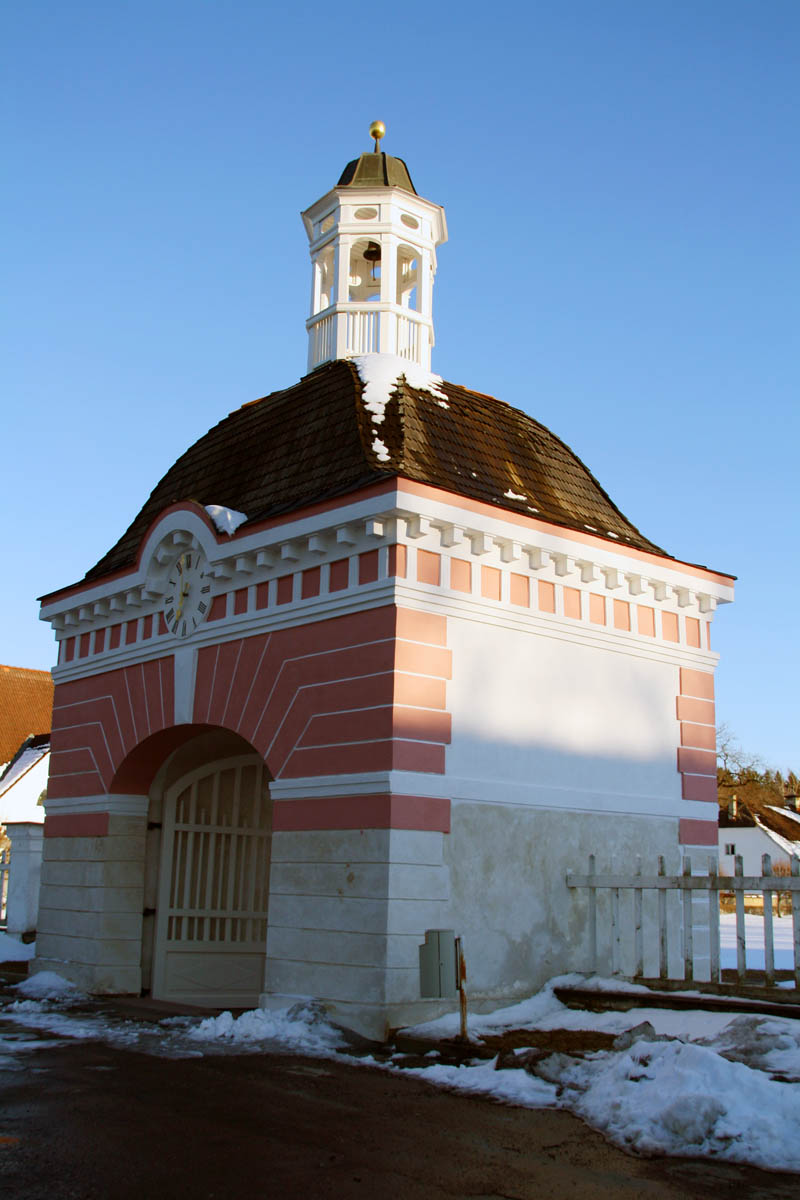
The entrance gate of Sagadi Manor, Lahemaa

Sagadi Manor seen through its entrance gate

As I mentioned earlier, the Lahemaa National Park was founded in 1971 and was the first of its kind, not only in Estonia, but in the entire Soviet Union, part of which Estonia was at the time.

Luckily, the Soviet era left the ancient forests and the extraordinary nature of Lahemaa intact, but you can still find remnants of the Soviet times especially on the coast. For example in Juminda and Suurpea there are empty, decaying military bases and in Rutja there is an old military airfield. These are quite intriguing for anyone interested in military history.

And old Soviet watchtower at Suurpea

Võsu, our own hometown, is an excellent base for exploring all the beauties of Lahemaa. Võsu is an old seaside resort that has plenty of charm. In summer it offers several cafés and restaurants for the hungry and the thirsty. It has a village shop that also caters for all the basic needs of a visitor. In winter nothing much happens there, but in summer Võsu springs into life.

Yet, even during the high season  it does not lose its true character - it is a charming and idyllic small town that offers peace and tranquility for the visitor.

Little flower shop in Võsu


A jug of sangria is refreshing in the end of the summer day

So, why not visit Estonia and Lahemaa this coming summer!  Lahemaa has plenty to offer for anyone interested in nature, natural beauty, beaches, history and culture. And also in good living and in peace and tranquility.

If you are interested in renting an apartment at our house, do not hesitate to contact us! Either with an email: tiina.linkama (at) villaottilia.ee or through Villa Ottilia's homepage

Welcome!

Monday, 17 December 2012

#142. mustavalkomaanantain haaste: valmistelu

Jouluun me valmistaudumme mm. valmistamalla ja saattamalla joulukortteja ja joulukirjeitä ystävillemme


Muita valmisteluja ja valmistautumisia löydät täältä: #142. mustavalkomaanantain haaste

Tuesday, 11 December 2012

Friday, 7 December 2012

Valokuvatorstain 256. haaste: voima

Torstaihaaste tulee poikkeuksellisesti tänne, koska Suomalaisena Virossa -blogissa on meneillään joulukalenteri, enkä viitsi sinne väliin laittaa nyt muuta. Vastasin tänään jo toiseen haasteeseen jonka aihe oli samalta akselilta: DYSTOPIA. Joten tässä meni sitten kaksi kärpästä samalla iskulla. Tai ainakin haastetta.

The assignment was for this Thursday was POWER.

 See also today's post: DYSTOPIA.


Other powerful photos here: POWER

Photo assignment: dystopia

Edellinen haaste oli utopia ja jälkimmäinen sen vastakohta eli dystopia.

Wikipedia sanoo dystopiasta näin:


Dystopia (muinaiskreikaksi δυσ- + τόπος; myös: kakotopia, antiutopia) on tulevaisuuden epätoivottava yhteiskunta.[1] Termi on tarkoitettu utopian vastakohdaksi, ja sillä viitataan usein kuvitteelliseen lähitulevaisuuden yhteiskuntaan, jonka odotetaan syntyvän vallitsevien yhteiskunnallisten kehityssuuntien kiihtyessä huippuunsa. Tyypillisesti tuloksena on ihmisarvoa loukkaava sortoyhteiskunta tai nykyisin myös ekologisen katastrofin kokenut maailma

Kuvaan käytin taannoin ostamia pieniä muovisotilaita. Photoshopissa vielä muutin kuvan maailmaa epätoivoisemmaksi.

Ja tällainen siitä syntyi:


Last assignment was utopia, this time the assignment was utopia's opposite: dystopia. I used small plastic soldiers and a little bit of photoshopping and this is what became of my interpretation of dystopia.

Wednesday, 5 December 2012

Utopia

Sain kuvahaasteen Vimpulalta: haasteena oli kuvata Utopia. Ja näin siihen vastasin.

--

I received a photo assignment from Vimpula: Utopia. This is my reply.

Pierre Puvis de Chavannes Pyhä lehto (The sacred grove) 1883-84

Tuesday, 4 December 2012

#140. B/W Monday

Koska normiblogini Suomalaisena Virossa on pyhitetty joulukuun ajan erilaisille kalenteripostituksille, vastaan maanantain haasteeseen täällä.

Haastehan oli ottaa mustavalkoinen kuva sellaisenaan, ilman kuvankäsittelyä tai kameran mustavalkoasetuksia.

Tänään se oli helppoa - maiseman peitti outo usva joka vei viimeisetkin värit kuvasta.

Villa Ottilian takapihaa kuvassa.

---

Since my Finnish blog Suomalaisena Virossa is dedicated  for Christmas posts in the form of a calendar this month, I will use this blog for this week's b/w challenge.

The idea was to take a true black and white photo without using camera's b/w mode or generating the image using post-production.

Here it is: our garden on this foggy winter's day


Wednesday, 14 March 2012

Dancing cow-creamer and its momma

This time DPS's weekly assignment asked us to use natural light as the source of light.

Description:

This week: "Lighting: Natural Window Light". As the days grow longer in the northern hemisphere and shorter in the south, we are all aware of sunlight. For this assignment, I want you to find a window or doorway and observe the light that comes through it at different times of the day. Use it to light your assignment image. You can do a portrait, but if you don't have a willing model (and not interested in a self-portrait), try a still life. Be very aware of shadows and how they can add to or detract from your image.

I say, this was a tough one. I decided to use two very soft-lined objects: a ceramic cow-creamer and a ceramic butter-holder. Both white. On a white table in front of a window.

I shifted the objects and observed how the light reflected from them during several hours. I ended up with a bunch of photos and had a hard time deciding which one I would post as the entry.
Here they are, my cows. Which one is your favourite?


Number 1


Number 2


Number 3


Number 4


Number 5


Number 6

Number 7


Number 8

Number 9


I still haven't  decided. Strange, I like each one of them for some particular reason. I guess my choice will depend on which one of them best corresponds to the given assignment.

Thursday, 8 March 2012

Heaven's Hall in South Estonia

One of my favourite spots in South Estonia are the Heaven's Halls (Taevaskoda), close to the small town of Põlva. The name of the place derives from red and yellow sandstone cliffs that are formed like two giant halls.

The entire nature reserve area of Taevaskoda is truely beautiful. The river Ahja and its sandstone banks with many caves titillate imagination and give sanctuary to such rear species like the Kingfisher.

Two days ago I visited the Heaven's Halls again. And here are some photos I made during that day:

River Ahja seen from a dam bridge - but what is down there?! Let's take a closer look.

Snow roses floating on the river - They are formed of the froth made by the churning of the waterfall above.

A close-up of the snow roses

Red and yellow sandstone cliffs

Reflections on the river

Snow-covered stones on the river

Water has carved small caves in the soft sandstone

Maiden's cave

The river reflects the pale and soft colours of March

A bridge leads you to the Heaven's Hall

Snowmen guard the Heaven's Hall

The river seen from high above

Two wild ducks swimming in the river

A row of birches leads you away from the Heaven's Halls.